Why AI-Powered Call Routing Matters in Insurance in 2026

Amir Prodensky
CEO
Dec 15, 2025
11 min read
Why traditional call routing fails and what works better
Call routing is how customer calls get connected to the right agent or department. It’s essential in insurance because quick, accurate help keeps customers happy and loyal.
Traditional call routing often means long waits and misdirected calls, which frustrates customers and wastes time.
AI changes the game by using natural language understanding to listen, learn, and route calls intelligently. This means shorter wait times and smarter connections.
Here’s what you can expect with AI-powered call routing:
Better customer experience with faster, more accurate responses.
Higher agent productivity by reducing call transfers.
Cost savings through efficient call handling.
Easy scalability as your business grows.
But, before looking at what AI fixes, it helps to understand what’s broken today. Let’s start with the common pain points insurers deal with using traditional call routing.
What challenges does traditional insurance call routing face
Traditional insurance call routing often struggles with inefficiency. Manual or rule-based systems can cause uneven call distribution, long hold times, and frequent misroutes. Customers get frustrated, and agents feel overwhelmed, which hurts morale and productivity.
Insurance calls aren’t simple. They cover complex areas like claims, billing, and underwriting, each needing specialized attention.
And these problems don’t come from bad teams. They come from outdated logic
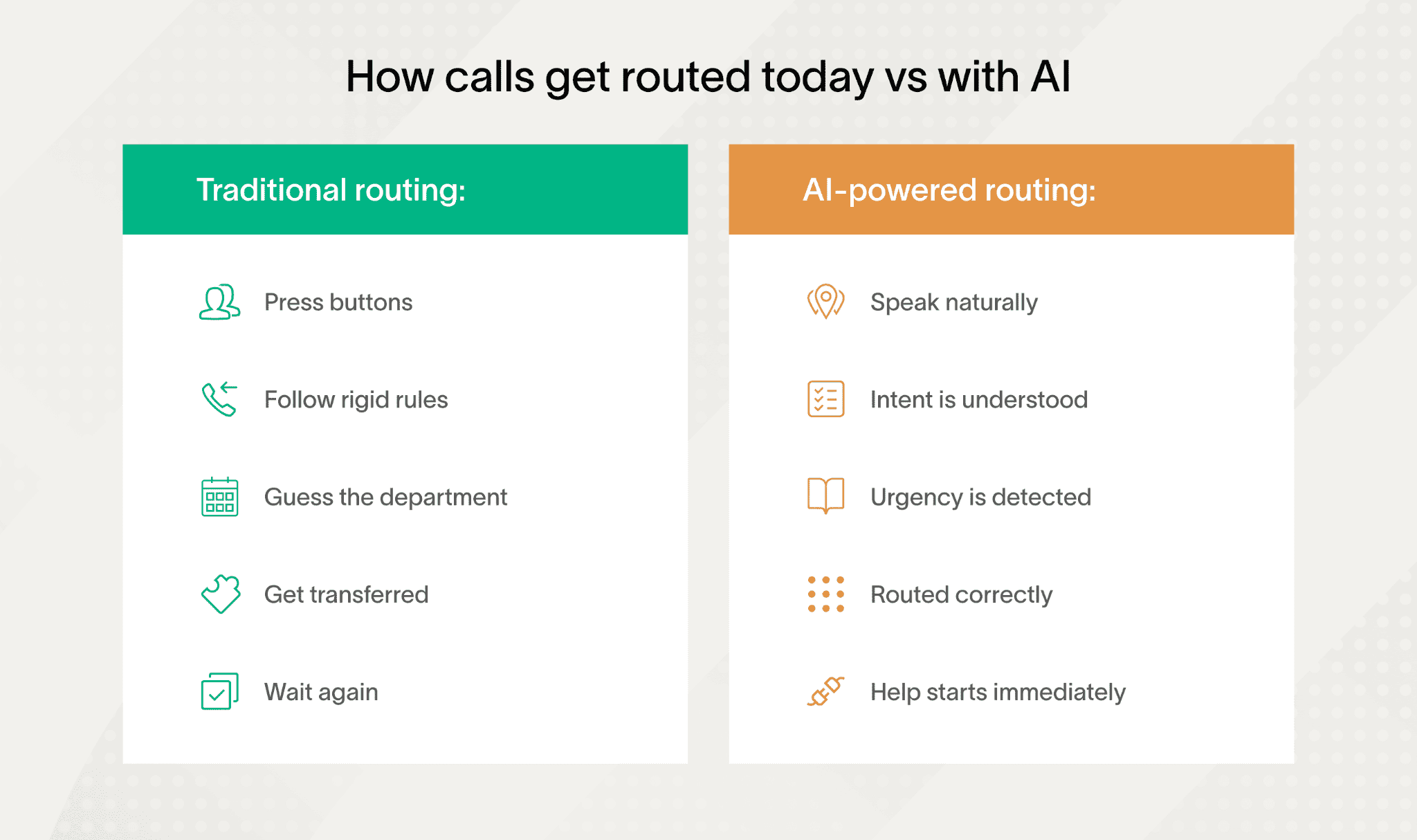
Here are some common pain points:
Inefficient call distribution and long holds.
Misrouting to wrong departments or agents.
Limited ability to personalize customer interactions.
Struggles handling multilingual callers or diverse needs.
These challenges become even tougher during peak seasons or major claim events when call volumes spike. Plus, fragmented legacy systems and siloed data make routing calls smoothly almost impossible.
You’ll find that adopting intelligent call routing powered by AI makes a big difference. For instance, Strada integrates with your existing AMS, CRM, and telephony platforms, enabling automated call routing with personalized, scalable voice AI agents.
This technology handles complex insurance scenarios seamlessly and cuts hold times to zero, helping you deliver better service without burning out your team.
Once these problems are clear, the solution becomes easier to see. This is where AI changes how calls are understood, prioritized, and routed.
How does AI improve call routing in insurance?
You’ll quickly see how AI powers smarter call routing in insurance by making sense of every caller’s needs.
At its core, AI uses technologies like natural language processing, speech recognition, and sentiment analysis to understand what the caller wants, even before they say it clearly.
Here’s what happens: AI listens to or reads your voice or text inputs and interprets your intent and context dynamically.
Unlike old systems that just send calls based on simple menus, automated call routing evaluates urgency, policy type, customer profile, and even your mood to prioritize calls.
That sounds impressive, but the real difference shows up in everyday call handling. A simple comparison makes it clear what actually changes for both customers and agents.
Scenario | Traditional call routing | AI-powered call routing |
How the caller explains the issue | IVR menus and button presses | Natural speech, no menus |
Understanding intent | Fixed rules and keywords | NLP understands context |
Call priority | First come, first served | Urgency and customer value |
Misrouted calls | Common | Rare |
Call transfers | Frequent | Minimal |
Hold time | Often long | Often near zero |
Experience | Frustrating and slow | Smooth and conversational |
This means your claim after an accident or a billing question won’t get stuck behind less urgent calls.
AI then routes you to the best-skilled agent or virtual assistant.
These chatbots or voice bots handle routine tasks like First Notice of Loss (FNOL), renewals, or policy updates faster and without waiting on hold. Plus, voice biometrics protect your identity by authenticating callers and spotting fraud instantly.
To make this easier to grasp, here’s how AI enhances call routing with practical features:
1. Adaptive call flows and real-time optimization
AI adjusts the conversation path based on how you respond, ensuring the call goes smoothly. It learns from every interaction to improve routing accuracy over time.
2. Contextual understanding using advanced models
Frameworks like BERT or GPT, fine-tuned for insurance language, help AI grasp complex terms and scenarios. This lets it pick up subtle cues and deliver precise help.
3. Reinforcement learning
What’s more, reinforcement learning allows the system to keep getting smarter. It learns which agents or solutions worked best before and routes calls accordingly, improving with every call.
4. Sentiment analysis
Sentiment analysis tools like IBM Watson Tone Analyzer and Google Cloud Natural Language API scan your tone and emotions during the call. If they detect frustration or urgency, the system escalates you to a higher support level.
One standout example is Strada’s conversational AI platform.
It combines advanced NLP and insurance-trained AI to nail down caller intent and automate tasks like FNOL, renewals, and policy servicing. This boosts routing precision and makes every response feel spot on.
By using these AI-powered call routing services and call center routing software, insurance companies ensure you always reach the right help – fast and hassle-free.
Understanding what AI does is useful, but it’s even more helpful to know what actually powers it. Let’s break down the core building blocks behind AI-driven call routing.
What are the key components of an AI-powered call routing system?
You’re about to discover the essential pieces that make AI-powered call routing in insurance a game changer. These components work together to quickly understand, direct, and log calls, all while improving your customer experience and agent efficiency.
And these tools aren’t just technical pieces. Each one improves a real decision.
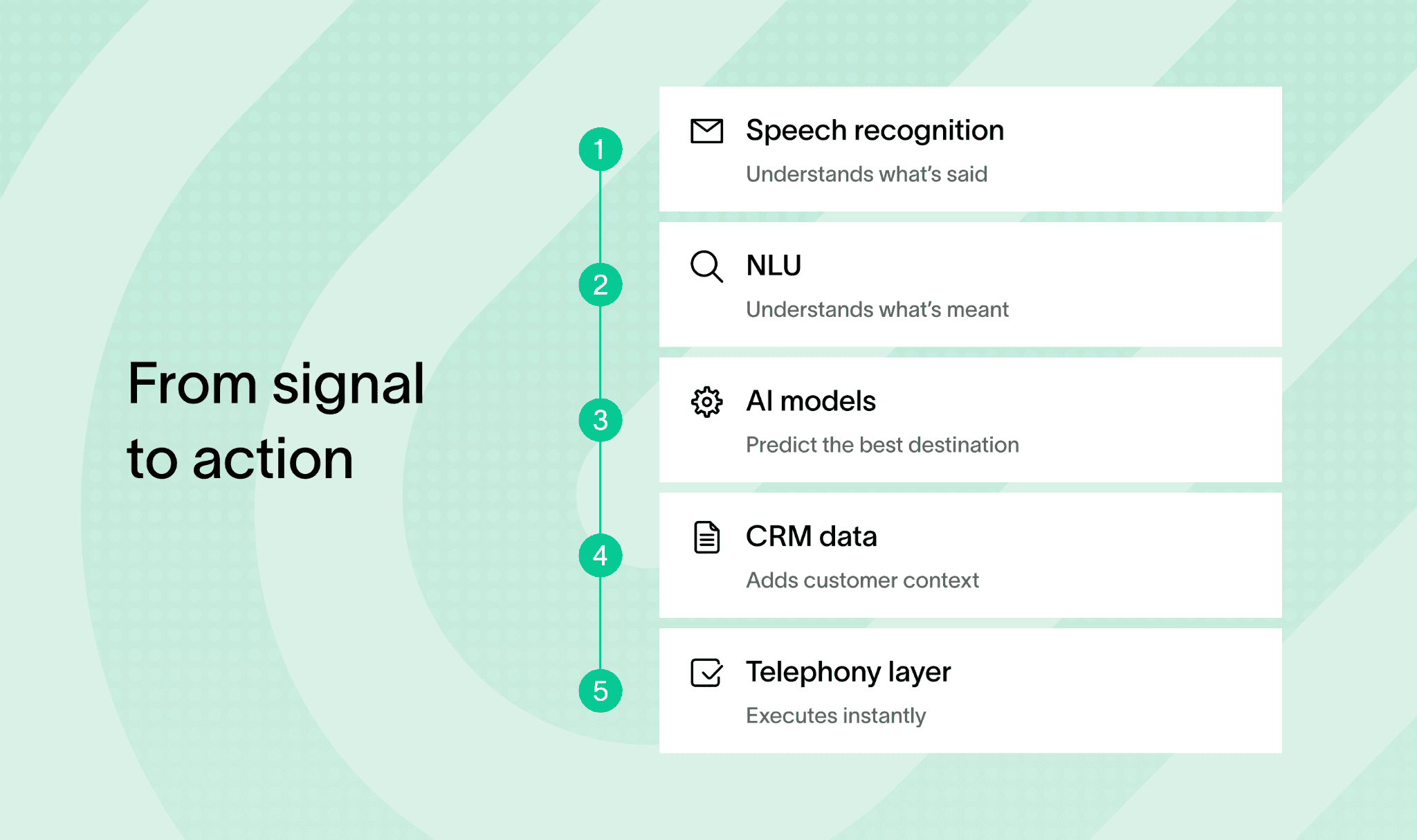
Let’s dive into the details.
Speech recognition tools
First up, speech recognition tools like Google Cloud Speech-to-Text, Amazon Transcribe, or IBM Watson Speech to Text convert caller voices into text in real time. This transcription is the foundation for understanding what the caller needs.
Natural language understanding frameworks
Once the speech is transcribed, natural language understanding frameworks step in. Platforms like Google Dialogflow, IBM Watson Assistant, Amazon Lex, and Microsoft Azure Cognitive Services take that text and grasp the caller’s intent or sentiment. This lets the system move beyond keywords to true comprehension.
Machine learning platforms
Then, machine learning platforms such as TensorFlow, PyTorch, and scikit-learn classify the caller’s intent and predict the best routing path.
These models constantly learn from new data to improve accuracy. To make sure this intelligence runs smoothly, integration with popular CRM systems like Salesforce, HubSpot, and Zendesk is crucial. This connection lets your AI pull up customer info and update records automatically.
Cloud telephony and contact center platforms
In the background, cloud telephony and contact center platforms with AI features, like Twilio Flex, Genesys Cloud, Five9, and Aircall handle the call flows, connecting the dots between AI decisions and real-world telecom systems.
Here’s a quick list to keep it practical:
Speech recognition → Google Cloud Speech-to-Text, Amazon Transcribe.
Natural language understanding → Google Dialogflow, IBM Watson Assistant.
Machine Learning for routing → TensorFlow, PyTorch.
CRM integration → Salesforce, HubSpot.
Contact center platforms → Twilio Flex, Genesys Cloud.
Real-time analytics → Power BI, Tableau, Looker.
On their own, each of these tools solves a specific problem. The real value appears when they operate together as integrated call routing services in production.
How these components work together in production
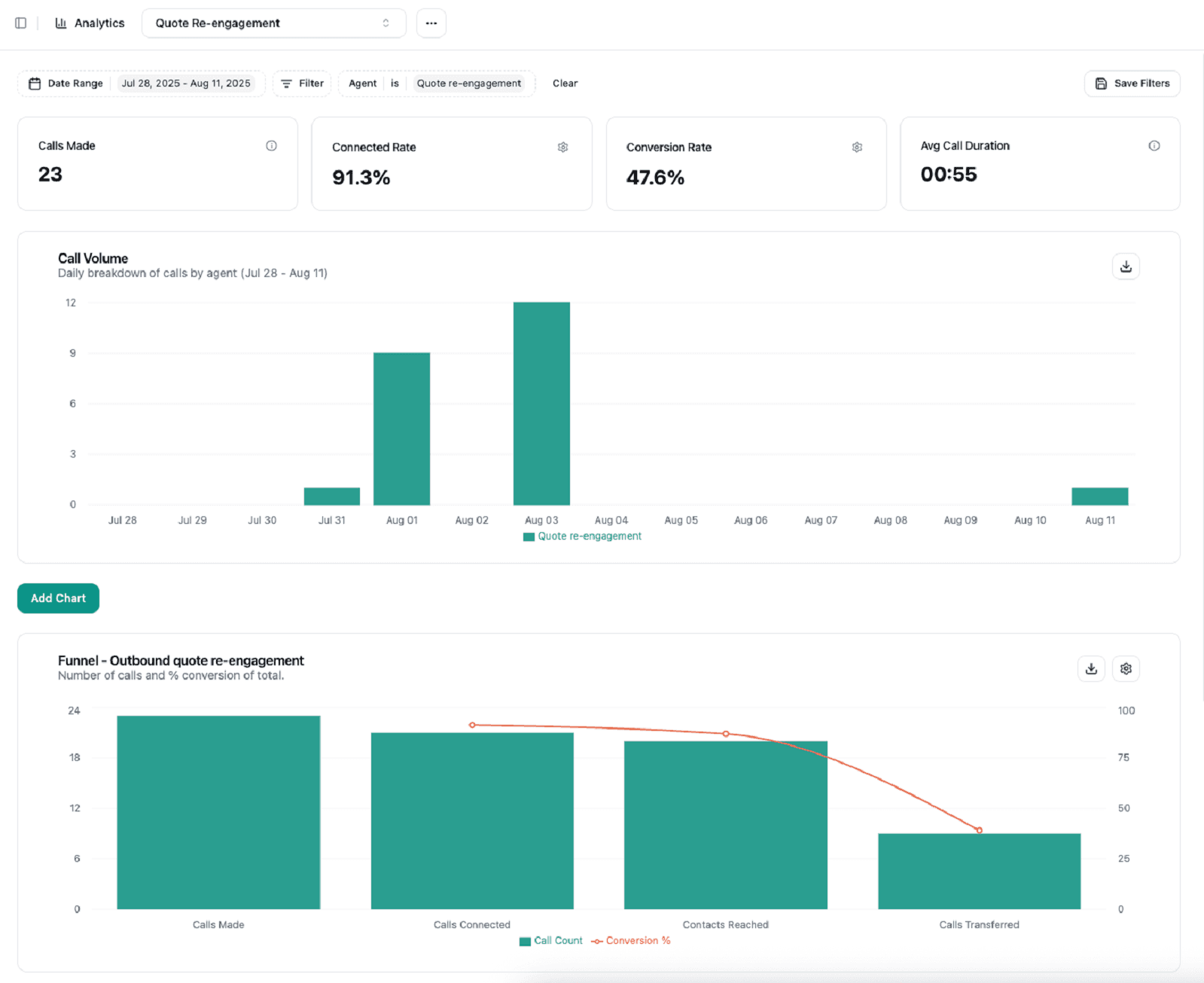
Having robust real-time analytics and reporting dashboards is key. Platforms like Power BI or Tableau help you track call metrics and AI performance at a glance.
Some tools also enhance the system with call transcription and metadata enrichment – NICE Nexidia and Verint are great examples. They improve the quality of data that gets fed into your AI models.
To handle large volumes of data smoothly, data pipelines using Apache Kafka or AWS Kinesis enable real-time ingestion and make retraining your models seamless.
Modern deployment relies heavily on containerization and orchestration technologies like Docker and Kubernetes. These tools let you scale and update your AI routing system without downtime or hiccups.
A standout example is Strada's platform.
It has an API-first architecture that effortlessly connects to AMS, CRM, telephony, and claims systems. Plus, Strada Workflows automate processes triggered by call outcomes, ensuring data flows smoothly between systems.
On top of that, Strada includes built-in evaluation tools that help keep response accuracy high and cut down errors and omissions risk. That’s how they enhance your system’s reliability in real time, putting you in control.
Once the system design makes sense, the next question is practical. How do you actually put this into place without disrupting operations?
What practical steps should insurance companies follow to implement AI call routing?
Implementing AI-powered call routing in insurance isn’t just about plugging in new tech. tt’s about carefully planning each step to fit your unique needs.
Here’s exactly what to do, so your AI solution works smoothly and adds real value from day one.
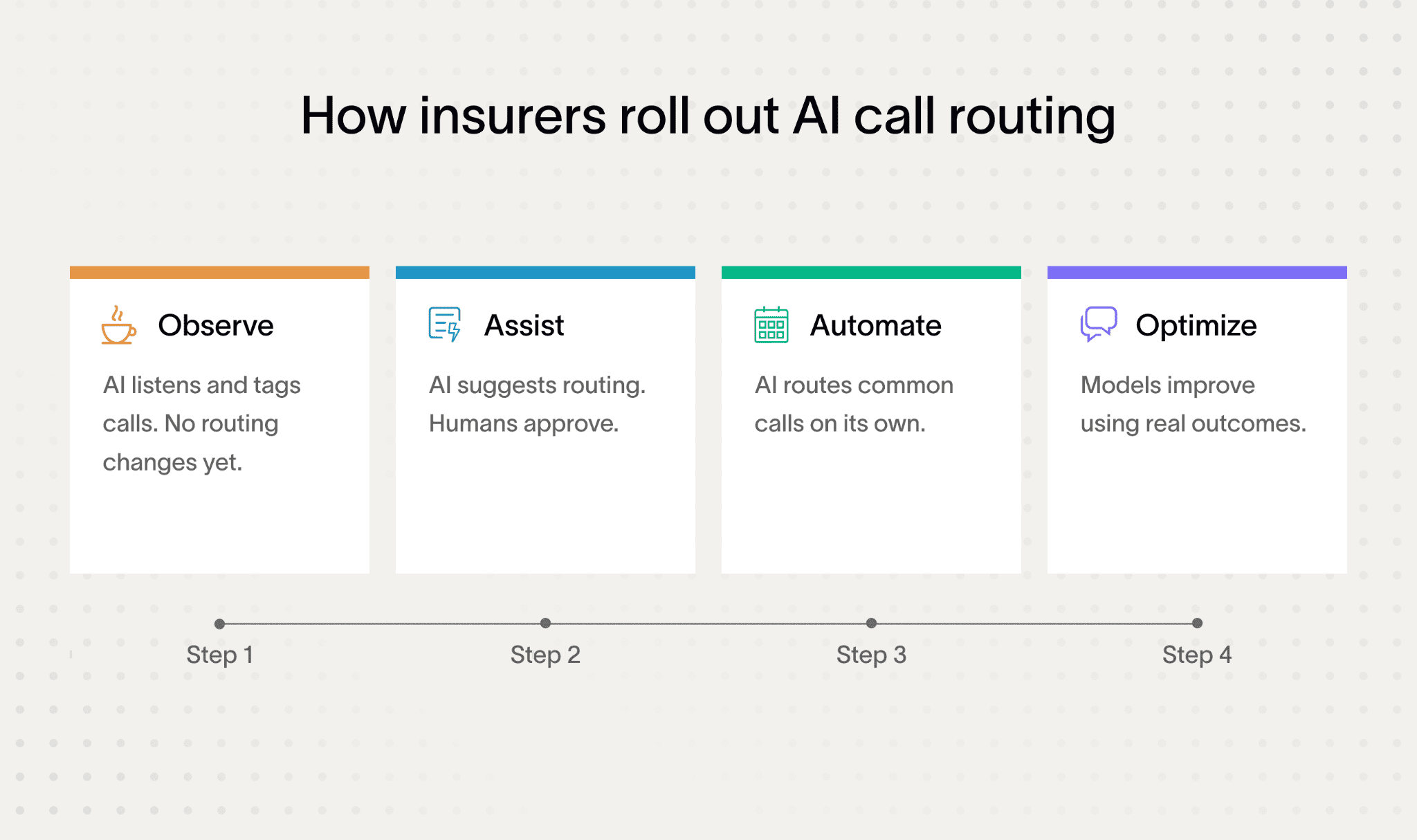
And let’s talk details.
Assessing call flows and preparing data
Start by assessing and mapping your specific call flows.
Insurance calls vary widely: claims, billing, underwriting, policy inquiries, and more. Understanding these workflows helps you design AI models that route calls accurately and efficiently, reducing wait times and frustration.
Next, focus on data preparation. Collect and annotate historical call data, including customer details. This data trains your AI to recognize different intents and customer profiles. Don’t forget to include diverse datasets. Your AI must handle various accents and languages to serve all customers well.
Selecting platforms and integrating systems
Choosing the right AI platform is crucial when deploying call center routing software in insurance environments.
Look for vendors who specialize in insurance use cases and offer easy integration options. Integration matters a lot – you’ll connect your AI with old telephony systems and CRM tools, usually through APIs or cloud telephony. This ensures a seamless flow of information.
Training and customizing AI routing models
Once your data and platform are in place, build and train custom NLP and ML models. These should recognize insurance-specific intents and follow your routing rules precisely.
It’s not one-size-fits-all; intelligent call routing needs to reflect your policies and customer expectations.
At this point, it helps to zoom out for a moment. This table shows how implementation usually unfolds in practice, from first planning to full rollout.
Stage | What happens | Why it matters |
Planning | Call flows and priorities are mapped | Avoids chaos later |
Data preparation | Past calls are cleaned and labeled | Improves intent accuracy |
System integration | AI connects to CRM and telephony | No data silos |
Model training | AI learns insurance language | Fewer routing mistakes |
Pilot launch | Limited rollout with real calls | Low-risk validation |
Optimization | Models improve from feedback | Better performance over time |
Full deployment | AI handles live traffic | Scales without friction |
Once the core implementation stages are clear, the focus shifts to execution details that determine long-term success.
Key considerations during rollout and scaling
Before going full scale, run pilot tests in small, controlled environments. Measure key metrics like call resolution times and customer satisfaction. Use what you learn to tweak your AI models. A phased rollout helps avoid big surprises and lets automated call routing adjust on the fly.
In insurance, compliance and data privacy are huge. Your AI must meet standards like HIPAA and GDPR. Apply data anonymization techniques to protect sensitive customer information. This keeps your company safe and builds trust with your clients.
Don’t forget the human side. Train your agents and staff on the new workflows and AI tools. Providing good change management support helps everyone adapt smoothly and boosts your overall success.
Setting up cross-functional teams helps make implementation easier. Bring together IT, compliance, and customer service teams so everyone’s aligned. This collaboration solves problems faster and drives better outcomes.
You’ll also want clear KPIs upfront. Define metrics for success and set up monitoring to catch model drift or bias. Keeping tabs on your AI’s performance means your call routing stays accurate and fair over time.
Plan for fallback too. If the AI system goes down, make sure calls can route manually without gaps. This contingency keeps your service reliable, no matter what.
To speed things up and reduce headaches, consider working with providers like Strada. Strada offers guided onboarding with insurance-specific pre-built use cases. Their expert support and security frameworks simplify integration and cut your time to value.
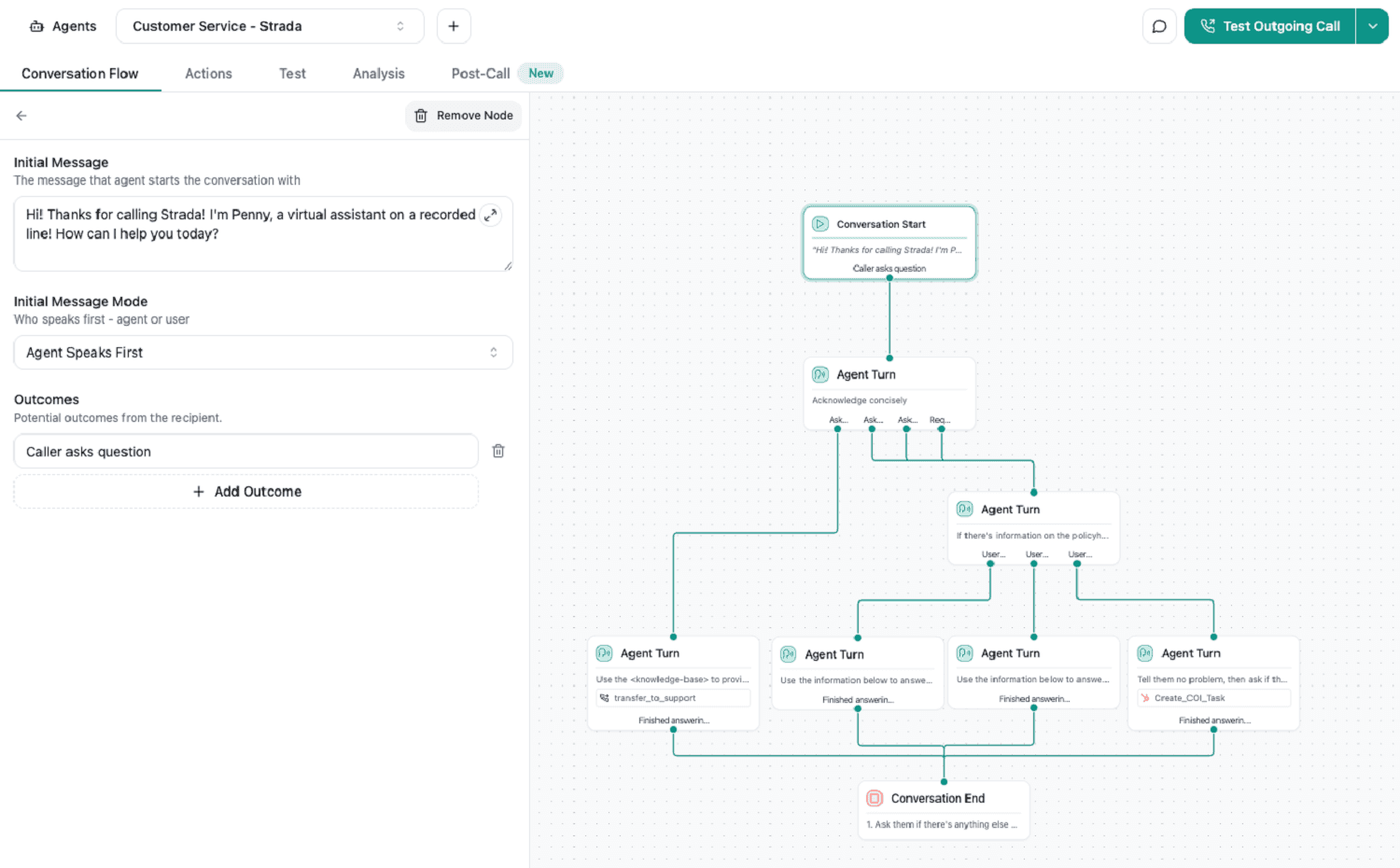
Plus, their no-code automation rules in Strada Workflows let you create triggers and follow-ups without heavy engineering. This means faster rollout and less disruption for your team.
When these rollout details are handled upfront, AI call routing becomes stable and predictable. With the foundation in place, it’s time to look at the real-world use cases where it delivers the most value.
What typical use cases exist for AI call routing in insurance?
At its core, intelligent call routing software directs calls to the right person at the right time. No waiting, no confusion. This tech doesn’t just speed things up; it makes the whole customer experience smoother and smarter.
Core AI call routing use cases in insurance
Here’s a quick look at the common ways insurance companies use AI call routing:
Urgent claims get routed immediately to specialized claims adjusters. This means faster responses when speed matters most.
Calls from high-value customers jump to senior agents who can provide personalized service.
Fraud alerts are sent directly to dedicated fraud detection teams to act swiftly.
Policy renewals, upselling, and cross-selling opportunities are steered to sales agents who know how to close the deal.
Billing or underwriting questions go straight to the experts best suited to answer them.
Chatbots and voice bots handle routine inquiries and pre-qualify calls, keeping human agents free for complex issues.
After-hours calls get intelligent voicemail or callback scheduling so customers always feel heard.
Multilingual support kicks in with specialized routing based on detecting the caller’s language.
Emergency event responses, like weather disasters or a sudden surge in claims, trigger scenario-based routing to keep service steady.
AI also re-routes calls in real time to balance agent availability and handle spikes in call volume without delays.
To make this more concrete, let’s look at common scenarios insurers handle every day. Each one triggers a different routing decision and outcome.
Typical AI call routing scenarios in real insurance workflows
AI call routing shows its real value in everyday insurance situations, not in demos or diagrams.
The examples below highlight how intelligent routing adapts to different call types and business priorities in real workflows:
Quick claims handling → Imagine an accident happens. The AI instantly flags the claim as urgent and routes it to a claims adjuster trained for such cases, speeding up the entire process.
VIP customer prioritization → When your best customers call in, AI recognizes them and connects them directly to senior agents who can provide tailored advice and build trust.
Fraud detection → Suspicious activity triggers an immediate routing of calls to fraud specialists, reducing risk and protecting both the insurer and policyholder.
Sales and retention → AI spots chances to renew policies or suggest new products, routing calls to sales teams focused on growing relationships and increasing customer lifetime value.
Expert support → Calls about underwriting or billing don’t bounce around. They go straight to the agents with the right expertise, improving first-call resolution.
Automation of routine calls → Chatbots and voice bots handle common questions and pre-screen calls. This frees up human agents to focus on more complex problems.
After-hours handling → Customers calling late don’t get left hanging. AI sets up intelligent voicemails or schedules callbacks, maintaining excellent service 24/7.
Multilingual support → The system detects the caller’s language and directs them to agents fluent in that language, ensuring clear communication every time.
Emergency response → When events like storms or floods happen, the system ramps up call routing to handle a surge in claims, keeping customers informed and supported.
What’s even better, platforms like Strada show real-world success using AI call routing. For example, Strada provides 24/7 First Notice of Loss intake via phone and SMS. This ensures claims get reported immediately, no matter the time.
They also automate renewals to boost retention rates and handle policy servicing with zero hold time, freeing human agents for tasks that truly need their expertise.
Strada’s AI agents also improve lead qualification and call campaign automation, which means more calls get connected and sales opportunities actually get followed through. You can learn more about these practical applications that make a real difference in your business here.
In short, AI-powered call routing isn’t just about moving calls around – it’s about creating a better experience for your customers and your team. By routing calls efficiently based on urgency, customer value, language, and specialist knowledge, you make every interaction count.
Plus, with automation handling the basics and intelligent rerouting adapting to real-time conditions, your call center runs smoother than ever.
Once AI routing is live, results matter. The next step is understanding how to measure performance and prove real business impact.
How to measure the success and ROI of AI-powered call routing
You’ve set up AI-powered call routing, but how do you know it’s really working? Measuring success and ROI isn’t guesswork – it’s about tracking the right data, gathering feedback, and making ongoing improvements.
Here’s how to get clear insights and prove the value of your investment.
Tracking core call routing KPIs
Start by tracking key performance indicators (KPIs) that show how your call routing software impacts your contact center.
Focus on metrics like:
Average Handle Time (AHT) → How long does it take to resolve a call?
First Call Resolution Rate (FCR) → Are issues getting solved on the first try?
Call Abandonment Rate (CAR) → How many callers hang up before reaching an agent?
Customer Satisfaction Score (CSAT) → What do customers think of their experience?
Net Promoter Score (NPS) → Would customers recommend your service?
These numbers give you a solid, real-world sense of how AI is improving efficiency and customer experience.
Using analytics, feedback, and continuous optimization
Next, use analytics dashboards like Power BI, Tableau, or even native platform reports for real-time monitoring and trend analysis. These tools help you see patterns over time and spot areas that need tweaks.
For example, Strada’s built-in analytics and AI evaluation tools provide transparent insights into call outcomes, routing accuracy, and AI agent performance, helping insurers demonstrate measurable ROI from day one.
Don’t just rely on data alone – qualitative feedback matters too. Asking customers and agents how they feel about the routing process can uncover issues or opportunities you won’t catch just by looking at numbers.
Their input helps you understand if the AI is routing calls smoothly or if there’s room to improve ease of use.
Use this data to optimize your routing models constantly. Call outcomes and feedback loops allow the AI to learn and adapt, making routing smarter over time.
You can also run A/B testing frameworks to compare different routing strategies and measure incremental improvements directly.
These metrics show how well the system performs on a day-to-day basis.
Turning performance metrics into ROI
Quantify cost savings by tracking concrete benefits like fewer call transfers, reduced wait times, better agent utilization, and lower customer churn. Additionally, measure how AI impacts agent attrition rates and training time – two big factors in call center costs.
Compare your results against industry benchmarks and your own past performance. This context shows whether you’re truly moving the needle or if there’s more to do.
By combining clear KPIs, smart analytics tools, real feedback, and continuous testing, you’ll not only measure success – you’ll maximize it.
And with platforms like Strada, you get practical tools and client testimonials proving the impact on customer satisfaction, efficiency, and cost reduction, right from day one.
With ROI in mind, the choice of tools becomes critical. The right platforms make measurement, optimization, and scaling much easier.
What are the best tools and platforms for AI insurance call routing?
Choosing the right call routing services for AI-powered insurance environments can make all the difference. You want solutions that fit your business, scale smoothly, and help improve your customer experience.
Let’s break down the best options by category – this way, you’ll know exactly what to look for and why.
Telephony and contact center platforms
These platforms handle live calls, queues, and agent availability in real time. They’re the layer that connects callers, AI routing logic, and human agents into a single call flow.
When evaluating platforms, the focus should be on practical capabilities:
Stable call handling during high call volumes.
APIs that support AI-driven routing decisions.
Native or easy CRM integration for customer context.
Queue and agent management controls.
Ability to scale during seasonal or event-driven spikes.
Commonly used platforms include Twilio Flex, Genesys Cloud, Five9, Aircall, and Zoom Contact Center.
Choosing the right one reduces routing errors, limits call transfers, and keeps AI workflows reliable under real production load.
NLP and speech recognition tools
Natural language processing and speech-to-text tech give your AI agents the power to understand and respond naturally. Popular choices are Google Dialogflow, Amazon Lex, IBM Watson Assistant, Microsoft Azure Cognitive Services, Google Cloud Speech-to-Text, and Amazon Transcribe.
These tools handle everything from interpreting intent to transcribing calls in real time.
Machine Learning frameworks
These tools are used when standard AI routing logic needs customization. They allow teams to build and adjust models instead of relying solely on pre-trained vendor solutions.
In real call routing systems, Machine Learning frameworks are mainly applied to:
Custom intent classification for non-standard call types.
Routing optimization based on historical call outcomes.
Handling edge cases that rule-based logic misses.
Controlled experimentation with new routing strategies.
TensorFlow, PyTorch, and scikit-learn are commonly used for these tasks. They’re most relevant for teams that want deeper control over routing behavior, rather than a fully managed setup.
CRM integrations
Your customer data lives here, so integration is crucial. Salesforce, HubSpot, and Zendesk are widely used and connect easily with call routing platforms and AI assistants.
This ensures your system delivers relevant information and updates in real time.
AI assistants and helper tools
Zoom AI Companion and Aircall AI Assist help agents work smarter by providing AI-powered support during calls, like real-time suggestions or automated note-taking. These tools can boost agent efficiency and call handling quality.
When evaluating vendors of call center routing software, focus on these criteria:
Ease of customization → You want a system that adapts to your insurance workflows without endless coding.
Compliance support → Insurance is heavily regulated, so check for features that ensure data privacy and security.
Scalability → Your call volume might spike. Pick a platform that scales without downtime.
Real-time analytics → Insights during calls help improve service instantly and optimize routing dynamically.
Complement your call routing setup with workforce management and quality monitoring tools like NICE and Verint. They help schedule agents efficiently and ensure every interaction meets your service standards.
Insurance-focused AI call routing platforms
Some newer AI platforms specialize in the insurance vertical, offering tailored functionality right out of the box. These can speed up deployment and bring industry best practices to your system.
One standout in this space is Strada.
It’s designed specifically for insurance call routing with deep native integrations into popular AMS (Agency Management Systems) and CRM platforms. Strada doesn’t stop at just routing calls – its compliance controls include SOC 2 Type 2 certification, keeping sensitive data safe.
Plus, with Strada Workflows, you automate beyond phone calls, tying together tasks without extra engineering lift.
Strada scales effortlessly to handle thousands of calls daily, focusing on insurance outcomes rather than generic call handling. It’s a practical choice if you want fast deployment, robust compliance, and a continuous feature evolution specifically for insurance.
By mixing and matching these tools based on your needs, you’ll build a call routing system that’s smart, compliant, and ready to boost your insurance customer experience.
With the tools and concepts in place, the final step is getting started. This is where everything comes together into a clear path forward.
How to start your AI-powered insurance call routing journey
You’ve seen how AI-powered call routing can boost customer experiences, increase efficiency, reduce costs, and scale with your business.
To get started, first assess your current infrastructure and business needs. This helps pinpoint where AI can make the biggest difference.
Next, consider these practical steps:
Run pilot projects to test AI call routing in real scenarios.
Schedule vendor demos that focus on insurance-specific solutions. For example, exploring Strada’s conversational AI platform and Workflows automation lets you see firsthand how call handling and customer satisfaction improve.
Keep in mind, AI adoption isn’t a one-time fix. You’ll want to build a culture of continuous improvement and stay up to date with the latest AI innovations. Setting up internal centers of excellence or AI governance committees can keep initiatives on track and aligned with your goals.
Identify some quick wins to build confidence, while also planning a long-term roadmap. This balances early success with sustainable growth.
Companies like Strada stand out by delivering insurance-focused outcomes, reliable security, and strong vendor partnerships – critical for smooth AI integration into your call routing software.
Starting with a demo of Strada’s tools is a smart move. You’ll get a clear picture of how AI can be your strategic advantage in delivering exceptional customer service.
Frequently Asked Questions
How fast can AI call routing be implemented in insurance?
Most insurers launch a pilot in 4–8 weeks. Full rollout usually takes a few months, depending on data readiness, integrations, and compliance requirements.
Does AI-powered call routing replace human agents?
Framer is a design tool that allows you to design websites on a freeform canvas, and then publish them as websites with a single click.
What types of insurance calls benefit most from AI routing?
Framer is a design tool that allows you to design websites on a freeform canvas, and then publish them as websites with a single click.
Can AI call routing work with legacy insurance systems?
Framer is a design tool that allows you to design websites on a freeform canvas, and then publish them as websites with a single click.
Is AI call routing suitable for small insurance teams?
Framer is a design tool that allows you to design websites on a freeform canvas, and then publish them as websites with a single click.
Table of Contents
Carriers, MGAs, and brokers scale revenue-driving phone calls with Strada's conversational AI platform.
Start scaling with voice AI agents today
Join innovative carriers and MGAs transforming their calls with Strada.
Why AI-Powered Call Routing Matters in Insurance in 2026

Amir Prodensky
CEO
Dec 15, 2025
11 min read
Why traditional call routing fails and what works better
Call routing is how customer calls get connected to the right agent or department. It’s essential in insurance because quick, accurate help keeps customers happy and loyal.
Traditional call routing often means long waits and misdirected calls, which frustrates customers and wastes time.
AI changes the game by using natural language understanding to listen, learn, and route calls intelligently. This means shorter wait times and smarter connections.
Here’s what you can expect with AI-powered call routing:
Better customer experience with faster, more accurate responses.
Higher agent productivity by reducing call transfers.
Cost savings through efficient call handling.
Easy scalability as your business grows.
But, before looking at what AI fixes, it helps to understand what’s broken today. Let’s start with the common pain points insurers deal with using traditional call routing.
What challenges does traditional insurance call routing face
Traditional insurance call routing often struggles with inefficiency. Manual or rule-based systems can cause uneven call distribution, long hold times, and frequent misroutes. Customers get frustrated, and agents feel overwhelmed, which hurts morale and productivity.
Insurance calls aren’t simple. They cover complex areas like claims, billing, and underwriting, each needing specialized attention.
And these problems don’t come from bad teams. They come from outdated logic

Here are some common pain points:
Inefficient call distribution and long holds.
Misrouting to wrong departments or agents.
Limited ability to personalize customer interactions.
Struggles handling multilingual callers or diverse needs.
These challenges become even tougher during peak seasons or major claim events when call volumes spike. Plus, fragmented legacy systems and siloed data make routing calls smoothly almost impossible.
You’ll find that adopting intelligent call routing powered by AI makes a big difference. For instance, Strada integrates with your existing AMS, CRM, and telephony platforms, enabling automated call routing with personalized, scalable voice AI agents.
This technology handles complex insurance scenarios seamlessly and cuts hold times to zero, helping you deliver better service without burning out your team.
Once these problems are clear, the solution becomes easier to see. This is where AI changes how calls are understood, prioritized, and routed.
How does AI improve call routing in insurance?
You’ll quickly see how AI powers smarter call routing in insurance by making sense of every caller’s needs.
At its core, AI uses technologies like natural language processing, speech recognition, and sentiment analysis to understand what the caller wants, even before they say it clearly.
Here’s what happens: AI listens to or reads your voice or text inputs and interprets your intent and context dynamically.
Unlike old systems that just send calls based on simple menus, automated call routing evaluates urgency, policy type, customer profile, and even your mood to prioritize calls.
That sounds impressive, but the real difference shows up in everyday call handling. A simple comparison makes it clear what actually changes for both customers and agents.
Scenario | Traditional call routing | AI-powered call routing |
How the caller explains the issue | IVR menus and button presses | Natural speech, no menus |
Understanding intent | Fixed rules and keywords | NLP understands context |
Call priority | First come, first served | Urgency and customer value |
Misrouted calls | Common | Rare |
Call transfers | Frequent | Minimal |
Hold time | Often long | Often near zero |
Experience | Frustrating and slow | Smooth and conversational |
This means your claim after an accident or a billing question won’t get stuck behind less urgent calls.
AI then routes you to the best-skilled agent or virtual assistant.
These chatbots or voice bots handle routine tasks like First Notice of Loss (FNOL), renewals, or policy updates faster and without waiting on hold. Plus, voice biometrics protect your identity by authenticating callers and spotting fraud instantly.
To make this easier to grasp, here’s how AI enhances call routing with practical features:
1. Adaptive call flows and real-time optimization
AI adjusts the conversation path based on how you respond, ensuring the call goes smoothly. It learns from every interaction to improve routing accuracy over time.
2. Contextual understanding using advanced models
Frameworks like BERT or GPT, fine-tuned for insurance language, help AI grasp complex terms and scenarios. This lets it pick up subtle cues and deliver precise help.
3. Reinforcement learning
What’s more, reinforcement learning allows the system to keep getting smarter. It learns which agents or solutions worked best before and routes calls accordingly, improving with every call.
4. Sentiment analysis
Sentiment analysis tools like IBM Watson Tone Analyzer and Google Cloud Natural Language API scan your tone and emotions during the call. If they detect frustration or urgency, the system escalates you to a higher support level.
One standout example is Strada’s conversational AI platform.
It combines advanced NLP and insurance-trained AI to nail down caller intent and automate tasks like FNOL, renewals, and policy servicing. This boosts routing precision and makes every response feel spot on.
By using these AI-powered call routing services and call center routing software, insurance companies ensure you always reach the right help – fast and hassle-free.
Understanding what AI does is useful, but it’s even more helpful to know what actually powers it. Let’s break down the core building blocks behind AI-driven call routing.
What are the key components of an AI-powered call routing system?
You’re about to discover the essential pieces that make AI-powered call routing in insurance a game changer. These components work together to quickly understand, direct, and log calls, all while improving your customer experience and agent efficiency.
And these tools aren’t just technical pieces. Each one improves a real decision.

Let’s dive into the details.
Speech recognition tools
First up, speech recognition tools like Google Cloud Speech-to-Text, Amazon Transcribe, or IBM Watson Speech to Text convert caller voices into text in real time. This transcription is the foundation for understanding what the caller needs.
Natural language understanding frameworks
Once the speech is transcribed, natural language understanding frameworks step in. Platforms like Google Dialogflow, IBM Watson Assistant, Amazon Lex, and Microsoft Azure Cognitive Services take that text and grasp the caller’s intent or sentiment. This lets the system move beyond keywords to true comprehension.
Machine learning platforms
Then, machine learning platforms such as TensorFlow, PyTorch, and scikit-learn classify the caller’s intent and predict the best routing path.
These models constantly learn from new data to improve accuracy. To make sure this intelligence runs smoothly, integration with popular CRM systems like Salesforce, HubSpot, and Zendesk is crucial. This connection lets your AI pull up customer info and update records automatically.
Cloud telephony and contact center platforms
In the background, cloud telephony and contact center platforms with AI features, like Twilio Flex, Genesys Cloud, Five9, and Aircall handle the call flows, connecting the dots between AI decisions and real-world telecom systems.
Here’s a quick list to keep it practical:
Speech recognition → Google Cloud Speech-to-Text, Amazon Transcribe.
Natural language understanding → Google Dialogflow, IBM Watson Assistant.
Machine Learning for routing → TensorFlow, PyTorch.
CRM integration → Salesforce, HubSpot.
Contact center platforms → Twilio Flex, Genesys Cloud.
Real-time analytics → Power BI, Tableau, Looker.
On their own, each of these tools solves a specific problem. The real value appears when they operate together as integrated call routing services in production.
How these components work together in production
Having robust real-time analytics and reporting dashboards is key. Platforms like Power BI or Tableau help you track call metrics and AI performance at a glance.
Some tools also enhance the system with call transcription and metadata enrichment – NICE Nexidia and Verint are great examples. They improve the quality of data that gets fed into your AI models.
To handle large volumes of data smoothly, data pipelines using Apache Kafka or AWS Kinesis enable real-time ingestion and make retraining your models seamless.
Modern deployment relies heavily on containerization and orchestration technologies like Docker and Kubernetes. These tools let you scale and update your AI routing system without downtime or hiccups.
A standout example is Strada's platform.
It has an API-first architecture that effortlessly connects to AMS, CRM, telephony, and claims systems. Plus, Strada Workflows automate processes triggered by call outcomes, ensuring data flows smoothly between systems.
On top of that, Strada includes built-in evaluation tools that help keep response accuracy high and cut down errors and omissions risk. That’s how they enhance your system’s reliability in real time, putting you in control.

Once the system design makes sense, the next question is practical. How do you actually put this into place without disrupting operations?
What practical steps should insurance companies follow to implement AI call routing?
Implementing AI-powered call routing in insurance isn’t just about plugging in new tech. tt’s about carefully planning each step to fit your unique needs.
Here’s exactly what to do, so your AI solution works smoothly and adds real value from day one.

And let’s talk details.
Assessing call flows and preparing data
Start by assessing and mapping your specific call flows.
Insurance calls vary widely: claims, billing, underwriting, policy inquiries, and more. Understanding these workflows helps you design AI models that route calls accurately and efficiently, reducing wait times and frustration.
Next, focus on data preparation. Collect and annotate historical call data, including customer details. This data trains your AI to recognize different intents and customer profiles. Don’t forget to include diverse datasets. Your AI must handle various accents and languages to serve all customers well.
Selecting platforms and integrating systems
Choosing the right AI platform is crucial when deploying call center routing software in insurance environments.
Look for vendors who specialize in insurance use cases and offer easy integration options. Integration matters a lot – you’ll connect your AI with old telephony systems and CRM tools, usually through APIs or cloud telephony. This ensures a seamless flow of information.
Training and customizing AI routing models
Once your data and platform are in place, build and train custom NLP and ML models. These should recognize insurance-specific intents and follow your routing rules precisely.
It’s not one-size-fits-all; intelligent call routing needs to reflect your policies and customer expectations.
At this point, it helps to zoom out for a moment. This table shows how implementation usually unfolds in practice, from first planning to full rollout.
Stage | What happens | Why it matters |
Planning | Call flows and priorities are mapped | Avoids chaos later |
Data preparation | Past calls are cleaned and labeled | Improves intent accuracy |
System integration | AI connects to CRM and telephony | No data silos |
Model training | AI learns insurance language | Fewer routing mistakes |
Pilot launch | Limited rollout with real calls | Low-risk validation |
Optimization | Models improve from feedback | Better performance over time |
Full deployment | AI handles live traffic | Scales without friction |
Once the core implementation stages are clear, the focus shifts to execution details that determine long-term success.
Key considerations during rollout and scaling
Before going full scale, run pilot tests in small, controlled environments. Measure key metrics like call resolution times and customer satisfaction. Use what you learn to tweak your AI models. A phased rollout helps avoid big surprises and lets automated call routing adjust on the fly.
In insurance, compliance and data privacy are huge. Your AI must meet standards like HIPAA and GDPR. Apply data anonymization techniques to protect sensitive customer information. This keeps your company safe and builds trust with your clients.
Don’t forget the human side. Train your agents and staff on the new workflows and AI tools. Providing good change management support helps everyone adapt smoothly and boosts your overall success.
Setting up cross-functional teams helps make implementation easier. Bring together IT, compliance, and customer service teams so everyone’s aligned. This collaboration solves problems faster and drives better outcomes.
You’ll also want clear KPIs upfront. Define metrics for success and set up monitoring to catch model drift or bias. Keeping tabs on your AI’s performance means your call routing stays accurate and fair over time.
Plan for fallback too. If the AI system goes down, make sure calls can route manually without gaps. This contingency keeps your service reliable, no matter what.
To speed things up and reduce headaches, consider working with providers like Strada. Strada offers guided onboarding with insurance-specific pre-built use cases. Their expert support and security frameworks simplify integration and cut your time to value.

Plus, their no-code automation rules in Strada Workflows let you create triggers and follow-ups without heavy engineering. This means faster rollout and less disruption for your team.
When these rollout details are handled upfront, AI call routing becomes stable and predictable. With the foundation in place, it’s time to look at the real-world use cases where it delivers the most value.
What typical use cases exist for AI call routing in insurance?
At its core, intelligent call routing software directs calls to the right person at the right time. No waiting, no confusion. This tech doesn’t just speed things up; it makes the whole customer experience smoother and smarter.
Core AI call routing use cases in insurance
Here’s a quick look at the common ways insurance companies use AI call routing:
Urgent claims get routed immediately to specialized claims adjusters. This means faster responses when speed matters most.
Calls from high-value customers jump to senior agents who can provide personalized service.
Fraud alerts are sent directly to dedicated fraud detection teams to act swiftly.
Policy renewals, upselling, and cross-selling opportunities are steered to sales agents who know how to close the deal.
Billing or underwriting questions go straight to the experts best suited to answer them.
Chatbots and voice bots handle routine inquiries and pre-qualify calls, keeping human agents free for complex issues.
After-hours calls get intelligent voicemail or callback scheduling so customers always feel heard.
Multilingual support kicks in with specialized routing based on detecting the caller’s language.
Emergency event responses, like weather disasters or a sudden surge in claims, trigger scenario-based routing to keep service steady.
AI also re-routes calls in real time to balance agent availability and handle spikes in call volume without delays.
To make this more concrete, let’s look at common scenarios insurers handle every day. Each one triggers a different routing decision and outcome.
Typical AI call routing scenarios in real insurance workflows
AI call routing shows its real value in everyday insurance situations, not in demos or diagrams.
The examples below highlight how intelligent routing adapts to different call types and business priorities in real workflows:
Quick claims handling → Imagine an accident happens. The AI instantly flags the claim as urgent and routes it to a claims adjuster trained for such cases, speeding up the entire process.
VIP customer prioritization → When your best customers call in, AI recognizes them and connects them directly to senior agents who can provide tailored advice and build trust.
Fraud detection → Suspicious activity triggers an immediate routing of calls to fraud specialists, reducing risk and protecting both the insurer and policyholder.
Sales and retention → AI spots chances to renew policies or suggest new products, routing calls to sales teams focused on growing relationships and increasing customer lifetime value.
Expert support → Calls about underwriting or billing don’t bounce around. They go straight to the agents with the right expertise, improving first-call resolution.
Automation of routine calls → Chatbots and voice bots handle common questions and pre-screen calls. This frees up human agents to focus on more complex problems.
After-hours handling → Customers calling late don’t get left hanging. AI sets up intelligent voicemails or schedules callbacks, maintaining excellent service 24/7.
Multilingual support → The system detects the caller’s language and directs them to agents fluent in that language, ensuring clear communication every time.
Emergency response → When events like storms or floods happen, the system ramps up call routing to handle a surge in claims, keeping customers informed and supported.
What’s even better, platforms like Strada show real-world success using AI call routing. For example, Strada provides 24/7 First Notice of Loss intake via phone and SMS. This ensures claims get reported immediately, no matter the time.
They also automate renewals to boost retention rates and handle policy servicing with zero hold time, freeing human agents for tasks that truly need their expertise.
Strada’s AI agents also improve lead qualification and call campaign automation, which means more calls get connected and sales opportunities actually get followed through. You can learn more about these practical applications that make a real difference in your business here.
In short, AI-powered call routing isn’t just about moving calls around – it’s about creating a better experience for your customers and your team. By routing calls efficiently based on urgency, customer value, language, and specialist knowledge, you make every interaction count.
Plus, with automation handling the basics and intelligent rerouting adapting to real-time conditions, your call center runs smoother than ever.
Once AI routing is live, results matter. The next step is understanding how to measure performance and prove real business impact.
How to measure the success and ROI of AI-powered call routing
You’ve set up AI-powered call routing, but how do you know it’s really working? Measuring success and ROI isn’t guesswork – it’s about tracking the right data, gathering feedback, and making ongoing improvements.
Here’s how to get clear insights and prove the value of your investment.
Tracking core call routing KPIs
Start by tracking key performance indicators (KPIs) that show how your call routing software impacts your contact center.
Focus on metrics like:
Average Handle Time (AHT) → How long does it take to resolve a call?
First Call Resolution Rate (FCR) → Are issues getting solved on the first try?
Call Abandonment Rate (CAR) → How many callers hang up before reaching an agent?
Customer Satisfaction Score (CSAT) → What do customers think of their experience?
Net Promoter Score (NPS) → Would customers recommend your service?
These numbers give you a solid, real-world sense of how AI is improving efficiency and customer experience.
Using analytics, feedback, and continuous optimization
Next, use analytics dashboards like Power BI, Tableau, or even native platform reports for real-time monitoring and trend analysis. These tools help you see patterns over time and spot areas that need tweaks.
For example, Strada’s built-in analytics and AI evaluation tools provide transparent insights into call outcomes, routing accuracy, and AI agent performance, helping insurers demonstrate measurable ROI from day one.
Don’t just rely on data alone – qualitative feedback matters too. Asking customers and agents how they feel about the routing process can uncover issues or opportunities you won’t catch just by looking at numbers.
Their input helps you understand if the AI is routing calls smoothly or if there’s room to improve ease of use.
Use this data to optimize your routing models constantly. Call outcomes and feedback loops allow the AI to learn and adapt, making routing smarter over time.
You can also run A/B testing frameworks to compare different routing strategies and measure incremental improvements directly.
These metrics show how well the system performs on a day-to-day basis.
Turning performance metrics into ROI
Quantify cost savings by tracking concrete benefits like fewer call transfers, reduced wait times, better agent utilization, and lower customer churn. Additionally, measure how AI impacts agent attrition rates and training time – two big factors in call center costs.
Compare your results against industry benchmarks and your own past performance. This context shows whether you’re truly moving the needle or if there’s more to do.
By combining clear KPIs, smart analytics tools, real feedback, and continuous testing, you’ll not only measure success – you’ll maximize it.
And with platforms like Strada, you get practical tools and client testimonials proving the impact on customer satisfaction, efficiency, and cost reduction, right from day one.
With ROI in mind, the choice of tools becomes critical. The right platforms make measurement, optimization, and scaling much easier.
What are the best tools and platforms for AI insurance call routing?
Choosing the right call routing services for AI-powered insurance environments can make all the difference. You want solutions that fit your business, scale smoothly, and help improve your customer experience.
Let’s break down the best options by category – this way, you’ll know exactly what to look for and why.
Telephony and contact center platforms
These platforms handle live calls, queues, and agent availability in real time. They’re the layer that connects callers, AI routing logic, and human agents into a single call flow.
When evaluating platforms, the focus should be on practical capabilities:
Stable call handling during high call volumes.
APIs that support AI-driven routing decisions.
Native or easy CRM integration for customer context.
Queue and agent management controls.
Ability to scale during seasonal or event-driven spikes.
Commonly used platforms include Twilio Flex, Genesys Cloud, Five9, Aircall, and Zoom Contact Center.
Choosing the right one reduces routing errors, limits call transfers, and keeps AI workflows reliable under real production load.
NLP and speech recognition tools
Natural language processing and speech-to-text tech give your AI agents the power to understand and respond naturally. Popular choices are Google Dialogflow, Amazon Lex, IBM Watson Assistant, Microsoft Azure Cognitive Services, Google Cloud Speech-to-Text, and Amazon Transcribe.
These tools handle everything from interpreting intent to transcribing calls in real time.
Machine Learning frameworks
These tools are used when standard AI routing logic needs customization. They allow teams to build and adjust models instead of relying solely on pre-trained vendor solutions.
In real call routing systems, Machine Learning frameworks are mainly applied to:
Custom intent classification for non-standard call types.
Routing optimization based on historical call outcomes.
Handling edge cases that rule-based logic misses.
Controlled experimentation with new routing strategies.
TensorFlow, PyTorch, and scikit-learn are commonly used for these tasks. They’re most relevant for teams that want deeper control over routing behavior, rather than a fully managed setup.
CRM integrations
Your customer data lives here, so integration is crucial. Salesforce, HubSpot, and Zendesk are widely used and connect easily with call routing platforms and AI assistants.
This ensures your system delivers relevant information and updates in real time.
AI assistants and helper tools
Zoom AI Companion and Aircall AI Assist help agents work smarter by providing AI-powered support during calls, like real-time suggestions or automated note-taking. These tools can boost agent efficiency and call handling quality.
When evaluating vendors of call center routing software, focus on these criteria:
Ease of customization → You want a system that adapts to your insurance workflows without endless coding.
Compliance support → Insurance is heavily regulated, so check for features that ensure data privacy and security.
Scalability → Your call volume might spike. Pick a platform that scales without downtime.
Real-time analytics → Insights during calls help improve service instantly and optimize routing dynamically.
Complement your call routing setup with workforce management and quality monitoring tools like NICE and Verint. They help schedule agents efficiently and ensure every interaction meets your service standards.
Insurance-focused AI call routing platforms
Some newer AI platforms specialize in the insurance vertical, offering tailored functionality right out of the box. These can speed up deployment and bring industry best practices to your system.
One standout in this space is Strada.
It’s designed specifically for insurance call routing with deep native integrations into popular AMS (Agency Management Systems) and CRM platforms. Strada doesn’t stop at just routing calls – its compliance controls include SOC 2 Type 2 certification, keeping sensitive data safe.
Plus, with Strada Workflows, you automate beyond phone calls, tying together tasks without extra engineering lift.
Strada scales effortlessly to handle thousands of calls daily, focusing on insurance outcomes rather than generic call handling. It’s a practical choice if you want fast deployment, robust compliance, and a continuous feature evolution specifically for insurance.
By mixing and matching these tools based on your needs, you’ll build a call routing system that’s smart, compliant, and ready to boost your insurance customer experience.
With the tools and concepts in place, the final step is getting started. This is where everything comes together into a clear path forward.
How to start your AI-powered insurance call routing journey
You’ve seen how AI-powered call routing can boost customer experiences, increase efficiency, reduce costs, and scale with your business.
To get started, first assess your current infrastructure and business needs. This helps pinpoint where AI can make the biggest difference.
Next, consider these practical steps:
Run pilot projects to test AI call routing in real scenarios.
Schedule vendor demos that focus on insurance-specific solutions. For example, exploring Strada’s conversational AI platform and Workflows automation lets you see firsthand how call handling and customer satisfaction improve.
Keep in mind, AI adoption isn’t a one-time fix. You’ll want to build a culture of continuous improvement and stay up to date with the latest AI innovations. Setting up internal centers of excellence or AI governance committees can keep initiatives on track and aligned with your goals.
Identify some quick wins to build confidence, while also planning a long-term roadmap. This balances early success with sustainable growth.
Companies like Strada stand out by delivering insurance-focused outcomes, reliable security, and strong vendor partnerships – critical for smooth AI integration into your call routing software.
Starting with a demo of Strada’s tools is a smart move. You’ll get a clear picture of how AI can be your strategic advantage in delivering exceptional customer service.
Frequently Asked Questions
How fast can AI call routing be implemented in insurance?
Most insurers launch a pilot in 4–8 weeks. Full rollout usually takes a few months, depending on data readiness, integrations, and compliance requirements.
Does AI-powered call routing replace human agents?
Framer is a design tool that allows you to design websites on a freeform canvas, and then publish them as websites with a single click.
What types of insurance calls benefit most from AI routing?
Framer is a design tool that allows you to design websites on a freeform canvas, and then publish them as websites with a single click.
Can AI call routing work with legacy insurance systems?
Framer is a design tool that allows you to design websites on a freeform canvas, and then publish them as websites with a single click.
Is AI call routing suitable for small insurance teams?
Framer is a design tool that allows you to design websites on a freeform canvas, and then publish them as websites with a single click.
Table of Contents
Carriers, MGAs, and brokers scale revenue-driving phone calls with Strada's conversational AI platform.
Start scaling with voice AI agents today
Join innovative carriers and MGAs transforming their calls with Strada.
Why AI-Powered Call Routing Matters in Insurance in 2026

Amir Prodensky
CEO
Dec 15, 2025
11 min read
Why traditional call routing fails and what works better
Call routing is how customer calls get connected to the right agent or department. It’s essential in insurance because quick, accurate help keeps customers happy and loyal.
Traditional call routing often means long waits and misdirected calls, which frustrates customers and wastes time.
AI changes the game by using natural language understanding to listen, learn, and route calls intelligently. This means shorter wait times and smarter connections.
Here’s what you can expect with AI-powered call routing:
Better customer experience with faster, more accurate responses.
Higher agent productivity by reducing call transfers.
Cost savings through efficient call handling.
Easy scalability as your business grows.
But, before looking at what AI fixes, it helps to understand what’s broken today. Let’s start with the common pain points insurers deal with using traditional call routing.
What challenges does traditional insurance call routing face
Traditional insurance call routing often struggles with inefficiency. Manual or rule-based systems can cause uneven call distribution, long hold times, and frequent misroutes. Customers get frustrated, and agents feel overwhelmed, which hurts morale and productivity.
Insurance calls aren’t simple. They cover complex areas like claims, billing, and underwriting, each needing specialized attention.
And these problems don’t come from bad teams. They come from outdated logic

Here are some common pain points:
Inefficient call distribution and long holds.
Misrouting to wrong departments or agents.
Limited ability to personalize customer interactions.
Struggles handling multilingual callers or diverse needs.
These challenges become even tougher during peak seasons or major claim events when call volumes spike. Plus, fragmented legacy systems and siloed data make routing calls smoothly almost impossible.
You’ll find that adopting intelligent call routing powered by AI makes a big difference. For instance, Strada integrates with your existing AMS, CRM, and telephony platforms, enabling automated call routing with personalized, scalable voice AI agents.
This technology handles complex insurance scenarios seamlessly and cuts hold times to zero, helping you deliver better service without burning out your team.
Once these problems are clear, the solution becomes easier to see. This is where AI changes how calls are understood, prioritized, and routed.
How does AI improve call routing in insurance?
You’ll quickly see how AI powers smarter call routing in insurance by making sense of every caller’s needs.
At its core, AI uses technologies like natural language processing, speech recognition, and sentiment analysis to understand what the caller wants, even before they say it clearly.
Here’s what happens: AI listens to or reads your voice or text inputs and interprets your intent and context dynamically.
Unlike old systems that just send calls based on simple menus, automated call routing evaluates urgency, policy type, customer profile, and even your mood to prioritize calls.
That sounds impressive, but the real difference shows up in everyday call handling. A simple comparison makes it clear what actually changes for both customers and agents.
Scenario | Traditional call routing | AI-powered call routing |
How the caller explains the issue | IVR menus and button presses | Natural speech, no menus |
Understanding intent | Fixed rules and keywords | NLP understands context |
Call priority | First come, first served | Urgency and customer value |
Misrouted calls | Common | Rare |
Call transfers | Frequent | Minimal |
Hold time | Often long | Often near zero |
Experience | Frustrating and slow | Smooth and conversational |
This means your claim after an accident or a billing question won’t get stuck behind less urgent calls.
AI then routes you to the best-skilled agent or virtual assistant.
These chatbots or voice bots handle routine tasks like First Notice of Loss (FNOL), renewals, or policy updates faster and without waiting on hold. Plus, voice biometrics protect your identity by authenticating callers and spotting fraud instantly.
To make this easier to grasp, here’s how AI enhances call routing with practical features:
1. Adaptive call flows and real-time optimization
AI adjusts the conversation path based on how you respond, ensuring the call goes smoothly. It learns from every interaction to improve routing accuracy over time.
2. Contextual understanding using advanced models
Frameworks like BERT or GPT, fine-tuned for insurance language, help AI grasp complex terms and scenarios. This lets it pick up subtle cues and deliver precise help.
3. Reinforcement learning
What’s more, reinforcement learning allows the system to keep getting smarter. It learns which agents or solutions worked best before and routes calls accordingly, improving with every call.
4. Sentiment analysis
Sentiment analysis tools like IBM Watson Tone Analyzer and Google Cloud Natural Language API scan your tone and emotions during the call. If they detect frustration or urgency, the system escalates you to a higher support level.
One standout example is Strada’s conversational AI platform.
It combines advanced NLP and insurance-trained AI to nail down caller intent and automate tasks like FNOL, renewals, and policy servicing. This boosts routing precision and makes every response feel spot on.
By using these AI-powered call routing services and call center routing software, insurance companies ensure you always reach the right help – fast and hassle-free.
Understanding what AI does is useful, but it’s even more helpful to know what actually powers it. Let’s break down the core building blocks behind AI-driven call routing.
What are the key components of an AI-powered call routing system?
You’re about to discover the essential pieces that make AI-powered call routing in insurance a game changer. These components work together to quickly understand, direct, and log calls, all while improving your customer experience and agent efficiency.
And these tools aren’t just technical pieces. Each one improves a real decision.

Let’s dive into the details.
Speech recognition tools
First up, speech recognition tools like Google Cloud Speech-to-Text, Amazon Transcribe, or IBM Watson Speech to Text convert caller voices into text in real time. This transcription is the foundation for understanding what the caller needs.
Natural language understanding frameworks
Once the speech is transcribed, natural language understanding frameworks step in. Platforms like Google Dialogflow, IBM Watson Assistant, Amazon Lex, and Microsoft Azure Cognitive Services take that text and grasp the caller’s intent or sentiment. This lets the system move beyond keywords to true comprehension.
Machine learning platforms
Then, machine learning platforms such as TensorFlow, PyTorch, and scikit-learn classify the caller’s intent and predict the best routing path.
These models constantly learn from new data to improve accuracy. To make sure this intelligence runs smoothly, integration with popular CRM systems like Salesforce, HubSpot, and Zendesk is crucial. This connection lets your AI pull up customer info and update records automatically.
Cloud telephony and contact center platforms
In the background, cloud telephony and contact center platforms with AI features, like Twilio Flex, Genesys Cloud, Five9, and Aircall handle the call flows, connecting the dots between AI decisions and real-world telecom systems.
Here’s a quick list to keep it practical:
Speech recognition → Google Cloud Speech-to-Text, Amazon Transcribe.
Natural language understanding → Google Dialogflow, IBM Watson Assistant.
Machine Learning for routing → TensorFlow, PyTorch.
CRM integration → Salesforce, HubSpot.
Contact center platforms → Twilio Flex, Genesys Cloud.
Real-time analytics → Power BI, Tableau, Looker.
On their own, each of these tools solves a specific problem. The real value appears when they operate together as integrated call routing services in production.
How these components work together in production
Having robust real-time analytics and reporting dashboards is key. Platforms like Power BI or Tableau help you track call metrics and AI performance at a glance.
Some tools also enhance the system with call transcription and metadata enrichment – NICE Nexidia and Verint are great examples. They improve the quality of data that gets fed into your AI models.
To handle large volumes of data smoothly, data pipelines using Apache Kafka or AWS Kinesis enable real-time ingestion and make retraining your models seamless.
Modern deployment relies heavily on containerization and orchestration technologies like Docker and Kubernetes. These tools let you scale and update your AI routing system without downtime or hiccups.
A standout example is Strada's platform.
It has an API-first architecture that effortlessly connects to AMS, CRM, telephony, and claims systems. Plus, Strada Workflows automate processes triggered by call outcomes, ensuring data flows smoothly between systems.
On top of that, Strada includes built-in evaluation tools that help keep response accuracy high and cut down errors and omissions risk. That’s how they enhance your system’s reliability in real time, putting you in control.

Once the system design makes sense, the next question is practical. How do you actually put this into place without disrupting operations?
What practical steps should insurance companies follow to implement AI call routing?
Implementing AI-powered call routing in insurance isn’t just about plugging in new tech. tt’s about carefully planning each step to fit your unique needs.
Here’s exactly what to do, so your AI solution works smoothly and adds real value from day one.

And let’s talk details.
Assessing call flows and preparing data
Start by assessing and mapping your specific call flows.
Insurance calls vary widely: claims, billing, underwriting, policy inquiries, and more. Understanding these workflows helps you design AI models that route calls accurately and efficiently, reducing wait times and frustration.
Next, focus on data preparation. Collect and annotate historical call data, including customer details. This data trains your AI to recognize different intents and customer profiles. Don’t forget to include diverse datasets. Your AI must handle various accents and languages to serve all customers well.
Selecting platforms and integrating systems
Choosing the right AI platform is crucial when deploying call center routing software in insurance environments.
Look for vendors who specialize in insurance use cases and offer easy integration options. Integration matters a lot – you’ll connect your AI with old telephony systems and CRM tools, usually through APIs or cloud telephony. This ensures a seamless flow of information.
Training and customizing AI routing models
Once your data and platform are in place, build and train custom NLP and ML models. These should recognize insurance-specific intents and follow your routing rules precisely.
It’s not one-size-fits-all; intelligent call routing needs to reflect your policies and customer expectations.
At this point, it helps to zoom out for a moment. This table shows how implementation usually unfolds in practice, from first planning to full rollout.
Stage | What happens | Why it matters |
Planning | Call flows and priorities are mapped | Avoids chaos later |
Data preparation | Past calls are cleaned and labeled | Improves intent accuracy |
System integration | AI connects to CRM and telephony | No data silos |
Model training | AI learns insurance language | Fewer routing mistakes |
Pilot launch | Limited rollout with real calls | Low-risk validation |
Optimization | Models improve from feedback | Better performance over time |
Full deployment | AI handles live traffic | Scales without friction |
Once the core implementation stages are clear, the focus shifts to execution details that determine long-term success.
Key considerations during rollout and scaling
Before going full scale, run pilot tests in small, controlled environments. Measure key metrics like call resolution times and customer satisfaction. Use what you learn to tweak your AI models. A phased rollout helps avoid big surprises and lets automated call routing adjust on the fly.
In insurance, compliance and data privacy are huge. Your AI must meet standards like HIPAA and GDPR. Apply data anonymization techniques to protect sensitive customer information. This keeps your company safe and builds trust with your clients.
Don’t forget the human side. Train your agents and staff on the new workflows and AI tools. Providing good change management support helps everyone adapt smoothly and boosts your overall success.
Setting up cross-functional teams helps make implementation easier. Bring together IT, compliance, and customer service teams so everyone’s aligned. This collaboration solves problems faster and drives better outcomes.
You’ll also want clear KPIs upfront. Define metrics for success and set up monitoring to catch model drift or bias. Keeping tabs on your AI’s performance means your call routing stays accurate and fair over time.
Plan for fallback too. If the AI system goes down, make sure calls can route manually without gaps. This contingency keeps your service reliable, no matter what.
To speed things up and reduce headaches, consider working with providers like Strada. Strada offers guided onboarding with insurance-specific pre-built use cases. Their expert support and security frameworks simplify integration and cut your time to value.

Plus, their no-code automation rules in Strada Workflows let you create triggers and follow-ups without heavy engineering. This means faster rollout and less disruption for your team.
When these rollout details are handled upfront, AI call routing becomes stable and predictable. With the foundation in place, it’s time to look at the real-world use cases where it delivers the most value.
What typical use cases exist for AI call routing in insurance?
At its core, intelligent call routing software directs calls to the right person at the right time. No waiting, no confusion. This tech doesn’t just speed things up; it makes the whole customer experience smoother and smarter.
Core AI call routing use cases in insurance
Here’s a quick look at the common ways insurance companies use AI call routing:
Urgent claims get routed immediately to specialized claims adjusters. This means faster responses when speed matters most.
Calls from high-value customers jump to senior agents who can provide personalized service.
Fraud alerts are sent directly to dedicated fraud detection teams to act swiftly.
Policy renewals, upselling, and cross-selling opportunities are steered to sales agents who know how to close the deal.
Billing or underwriting questions go straight to the experts best suited to answer them.
Chatbots and voice bots handle routine inquiries and pre-qualify calls, keeping human agents free for complex issues.
After-hours calls get intelligent voicemail or callback scheduling so customers always feel heard.
Multilingual support kicks in with specialized routing based on detecting the caller’s language.
Emergency event responses, like weather disasters or a sudden surge in claims, trigger scenario-based routing to keep service steady.
AI also re-routes calls in real time to balance agent availability and handle spikes in call volume without delays.
To make this more concrete, let’s look at common scenarios insurers handle every day. Each one triggers a different routing decision and outcome.
Typical AI call routing scenarios in real insurance workflows
AI call routing shows its real value in everyday insurance situations, not in demos or diagrams.
The examples below highlight how intelligent routing adapts to different call types and business priorities in real workflows:
Quick claims handling → Imagine an accident happens. The AI instantly flags the claim as urgent and routes it to a claims adjuster trained for such cases, speeding up the entire process.
VIP customer prioritization → When your best customers call in, AI recognizes them and connects them directly to senior agents who can provide tailored advice and build trust.
Fraud detection → Suspicious activity triggers an immediate routing of calls to fraud specialists, reducing risk and protecting both the insurer and policyholder.
Sales and retention → AI spots chances to renew policies or suggest new products, routing calls to sales teams focused on growing relationships and increasing customer lifetime value.
Expert support → Calls about underwriting or billing don’t bounce around. They go straight to the agents with the right expertise, improving first-call resolution.
Automation of routine calls → Chatbots and voice bots handle common questions and pre-screen calls. This frees up human agents to focus on more complex problems.
After-hours handling → Customers calling late don’t get left hanging. AI sets up intelligent voicemails or schedules callbacks, maintaining excellent service 24/7.
Multilingual support → The system detects the caller’s language and directs them to agents fluent in that language, ensuring clear communication every time.
Emergency response → When events like storms or floods happen, the system ramps up call routing to handle a surge in claims, keeping customers informed and supported.
What’s even better, platforms like Strada show real-world success using AI call routing. For example, Strada provides 24/7 First Notice of Loss intake via phone and SMS. This ensures claims get reported immediately, no matter the time.
They also automate renewals to boost retention rates and handle policy servicing with zero hold time, freeing human agents for tasks that truly need their expertise.
Strada’s AI agents also improve lead qualification and call campaign automation, which means more calls get connected and sales opportunities actually get followed through. You can learn more about these practical applications that make a real difference in your business here.
In short, AI-powered call routing isn’t just about moving calls around – it’s about creating a better experience for your customers and your team. By routing calls efficiently based on urgency, customer value, language, and specialist knowledge, you make every interaction count.
Plus, with automation handling the basics and intelligent rerouting adapting to real-time conditions, your call center runs smoother than ever.
Once AI routing is live, results matter. The next step is understanding how to measure performance and prove real business impact.
How to measure the success and ROI of AI-powered call routing
You’ve set up AI-powered call routing, but how do you know it’s really working? Measuring success and ROI isn’t guesswork – it’s about tracking the right data, gathering feedback, and making ongoing improvements.
Here’s how to get clear insights and prove the value of your investment.
Tracking core call routing KPIs
Start by tracking key performance indicators (KPIs) that show how your call routing software impacts your contact center.
Focus on metrics like:
Average Handle Time (AHT) → How long does it take to resolve a call?
First Call Resolution Rate (FCR) → Are issues getting solved on the first try?
Call Abandonment Rate (CAR) → How many callers hang up before reaching an agent?
Customer Satisfaction Score (CSAT) → What do customers think of their experience?
Net Promoter Score (NPS) → Would customers recommend your service?
These numbers give you a solid, real-world sense of how AI is improving efficiency and customer experience.
Using analytics, feedback, and continuous optimization
Next, use analytics dashboards like Power BI, Tableau, or even native platform reports for real-time monitoring and trend analysis. These tools help you see patterns over time and spot areas that need tweaks.
For example, Strada’s built-in analytics and AI evaluation tools provide transparent insights into call outcomes, routing accuracy, and AI agent performance, helping insurers demonstrate measurable ROI from day one.
Don’t just rely on data alone – qualitative feedback matters too. Asking customers and agents how they feel about the routing process can uncover issues or opportunities you won’t catch just by looking at numbers.
Their input helps you understand if the AI is routing calls smoothly or if there’s room to improve ease of use.
Use this data to optimize your routing models constantly. Call outcomes and feedback loops allow the AI to learn and adapt, making routing smarter over time.
You can also run A/B testing frameworks to compare different routing strategies and measure incremental improvements directly.
These metrics show how well the system performs on a day-to-day basis.
Turning performance metrics into ROI
Quantify cost savings by tracking concrete benefits like fewer call transfers, reduced wait times, better agent utilization, and lower customer churn. Additionally, measure how AI impacts agent attrition rates and training time – two big factors in call center costs.
Compare your results against industry benchmarks and your own past performance. This context shows whether you’re truly moving the needle or if there’s more to do.
By combining clear KPIs, smart analytics tools, real feedback, and continuous testing, you’ll not only measure success – you’ll maximize it.
And with platforms like Strada, you get practical tools and client testimonials proving the impact on customer satisfaction, efficiency, and cost reduction, right from day one.
With ROI in mind, the choice of tools becomes critical. The right platforms make measurement, optimization, and scaling much easier.
What are the best tools and platforms for AI insurance call routing?
Choosing the right call routing services for AI-powered insurance environments can make all the difference. You want solutions that fit your business, scale smoothly, and help improve your customer experience.
Let’s break down the best options by category – this way, you’ll know exactly what to look for and why.
Telephony and contact center platforms
These platforms handle live calls, queues, and agent availability in real time. They’re the layer that connects callers, AI routing logic, and human agents into a single call flow.
When evaluating platforms, the focus should be on practical capabilities:
Stable call handling during high call volumes.
APIs that support AI-driven routing decisions.
Native or easy CRM integration for customer context.
Queue and agent management controls.
Ability to scale during seasonal or event-driven spikes.
Commonly used platforms include Twilio Flex, Genesys Cloud, Five9, Aircall, and Zoom Contact Center.
Choosing the right one reduces routing errors, limits call transfers, and keeps AI workflows reliable under real production load.
NLP and speech recognition tools
Natural language processing and speech-to-text tech give your AI agents the power to understand and respond naturally. Popular choices are Google Dialogflow, Amazon Lex, IBM Watson Assistant, Microsoft Azure Cognitive Services, Google Cloud Speech-to-Text, and Amazon Transcribe.
These tools handle everything from interpreting intent to transcribing calls in real time.
Machine Learning frameworks
These tools are used when standard AI routing logic needs customization. They allow teams to build and adjust models instead of relying solely on pre-trained vendor solutions.
In real call routing systems, Machine Learning frameworks are mainly applied to:
Custom intent classification for non-standard call types.
Routing optimization based on historical call outcomes.
Handling edge cases that rule-based logic misses.
Controlled experimentation with new routing strategies.
TensorFlow, PyTorch, and scikit-learn are commonly used for these tasks. They’re most relevant for teams that want deeper control over routing behavior, rather than a fully managed setup.
CRM integrations
Your customer data lives here, so integration is crucial. Salesforce, HubSpot, and Zendesk are widely used and connect easily with call routing platforms and AI assistants.
This ensures your system delivers relevant information and updates in real time.
AI assistants and helper tools
Zoom AI Companion and Aircall AI Assist help agents work smarter by providing AI-powered support during calls, like real-time suggestions or automated note-taking. These tools can boost agent efficiency and call handling quality.
When evaluating vendors of call center routing software, focus on these criteria:
Ease of customization → You want a system that adapts to your insurance workflows without endless coding.
Compliance support → Insurance is heavily regulated, so check for features that ensure data privacy and security.
Scalability → Your call volume might spike. Pick a platform that scales without downtime.
Real-time analytics → Insights during calls help improve service instantly and optimize routing dynamically.
Complement your call routing setup with workforce management and quality monitoring tools like NICE and Verint. They help schedule agents efficiently and ensure every interaction meets your service standards.
Insurance-focused AI call routing platforms
Some newer AI platforms specialize in the insurance vertical, offering tailored functionality right out of the box. These can speed up deployment and bring industry best practices to your system.
One standout in this space is Strada.
It’s designed specifically for insurance call routing with deep native integrations into popular AMS (Agency Management Systems) and CRM platforms. Strada doesn’t stop at just routing calls – its compliance controls include SOC 2 Type 2 certification, keeping sensitive data safe.
Plus, with Strada Workflows, you automate beyond phone calls, tying together tasks without extra engineering lift.
Strada scales effortlessly to handle thousands of calls daily, focusing on insurance outcomes rather than generic call handling. It’s a practical choice if you want fast deployment, robust compliance, and a continuous feature evolution specifically for insurance.
By mixing and matching these tools based on your needs, you’ll build a call routing system that’s smart, compliant, and ready to boost your insurance customer experience.
With the tools and concepts in place, the final step is getting started. This is where everything comes together into a clear path forward.
How to start your AI-powered insurance call routing journey
You’ve seen how AI-powered call routing can boost customer experiences, increase efficiency, reduce costs, and scale with your business.
To get started, first assess your current infrastructure and business needs. This helps pinpoint where AI can make the biggest difference.
Next, consider these practical steps:
Run pilot projects to test AI call routing in real scenarios.
Schedule vendor demos that focus on insurance-specific solutions. For example, exploring Strada’s conversational AI platform and Workflows automation lets you see firsthand how call handling and customer satisfaction improve.
Keep in mind, AI adoption isn’t a one-time fix. You’ll want to build a culture of continuous improvement and stay up to date with the latest AI innovations. Setting up internal centers of excellence or AI governance committees can keep initiatives on track and aligned with your goals.
Identify some quick wins to build confidence, while also planning a long-term roadmap. This balances early success with sustainable growth.
Companies like Strada stand out by delivering insurance-focused outcomes, reliable security, and strong vendor partnerships – critical for smooth AI integration into your call routing software.
Starting with a demo of Strada’s tools is a smart move. You’ll get a clear picture of how AI can be your strategic advantage in delivering exceptional customer service.
Frequently Asked Questions
How fast can AI call routing be implemented in insurance?
Most insurers launch a pilot in 4–8 weeks. Full rollout usually takes a few months, depending on data readiness, integrations, and compliance requirements.
Does AI-powered call routing replace human agents?
Framer is a design tool that allows you to design websites on a freeform canvas, and then publish them as websites with a single click.
What types of insurance calls benefit most from AI routing?
Framer is a design tool that allows you to design websites on a freeform canvas, and then publish them as websites with a single click.
Can AI call routing work with legacy insurance systems?
Framer is a design tool that allows you to design websites on a freeform canvas, and then publish them as websites with a single click.
Is AI call routing suitable for small insurance teams?
Framer is a design tool that allows you to design websites on a freeform canvas, and then publish them as websites with a single click.
Table of Contents
Carriers, MGAs, and brokers scale revenue-driving phone calls with Strada's conversational AI platform.
Start scaling with voice AI agents today
Join innovative carriers and MGAs transforming their calls with Strada.
© 2025 Strada API, Inc.
